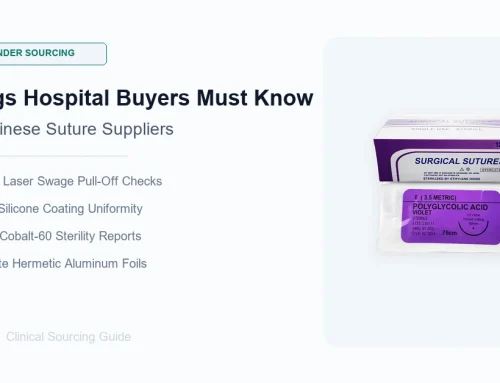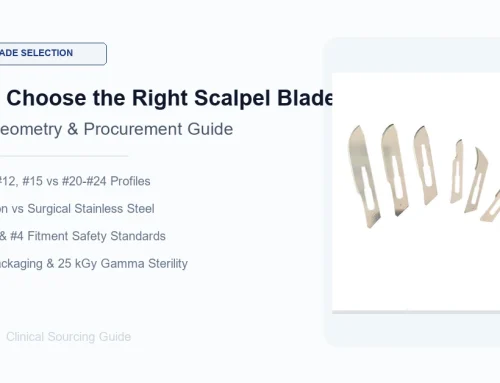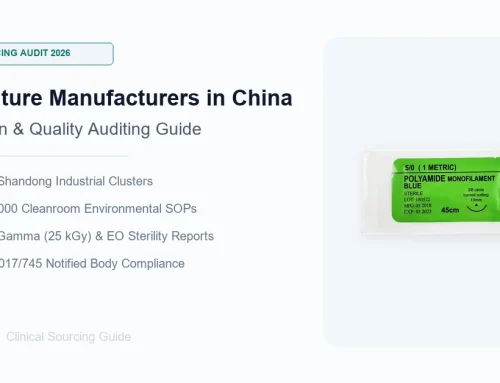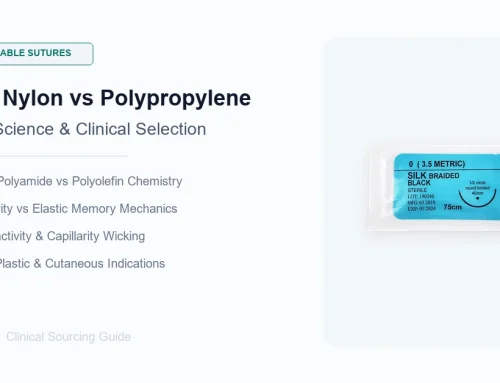




Looking to source generic surgical sutures from China? Compare 5 CE/ISO 13485-certified bulk suppliers side-by-side, see polymer specs, and get a quote within 24 hours.
Generic surgical sutures China procurement teams rely on are manufactured by CE and ISO 13485-certified suppliers to international pharmacopoeial specifications — offering the same polymer chemistry and equivalent clinical performance as premium alternatives at significantly lower bulk pricing. When sourcing generic surgical sutures China manufacturers produce, procurement teams can expect full regulatory documentation, equivalent absorption profiles, and consistent tensile strength across all material classifications. Sutures are classified by their material name: Polyglactin 910, Polydioxanone, Poliglecaprone 25, Polypropylene, Polyester, PGA. These are the standard names used in pharmacopoeias, regulatory submissions, and procurement specifications worldwide. This guide covers each material, key performance parameters, what to verify before ordering, and how to evaluate suppliers.
What Are Generic Surgical Sutures China Suppliers Offer?
Generic surgical sutures are manufactured from the same polymer chemistry as any other suture of the same material classification, to equivalent performance specifications, without a premium brand markup. The active material is identical — the difference is the manufacturer and the price.
The polymer materials used in surgical sutures — polyglycolic acid, polyglactin 910, polydioxanone, poliglecaprone 25, polypropylene — are defined in international pharmacopoeias (European Pharmacopoeia, USP) and ISO standards. Any ISO 13485-certified manufacturer producing these materials to pharmacopoeial specifications is producing a clinically equivalent product.
International Material Names — Complete Reference
| Generic Material Name | タイプ | Absorption | Structure | Even Medical Item No |
|---|---|---|---|---|
| Polyglactin 910 | Absorbable | 56–70 days | Braided | E20008 |
| Poliglecaprone 25 | Absorbable | 90–120 days | Monofilament | E20010 |
| Polydioxanone (PDO) | Absorbable | ~180 days | Monofilament | E20009 |
| ポリプロピレン | Non-Absorbable | Permanent, inert | Monofilament | E20004 |
| ポリエステル(編み込み) | Non-Absorbable | Permanent | Braided | E20002 |
| Nylon (Polyamide) | Non-Absorbable | Near-permanent | Monofilament | E20003 |
| ポリグリコール酸(PGA) | Absorbable | 60–90 days | Braided | E20007 |
| シルク(編み込み) | Non-Absorbable | Slow degradation | Braided | E20001 |
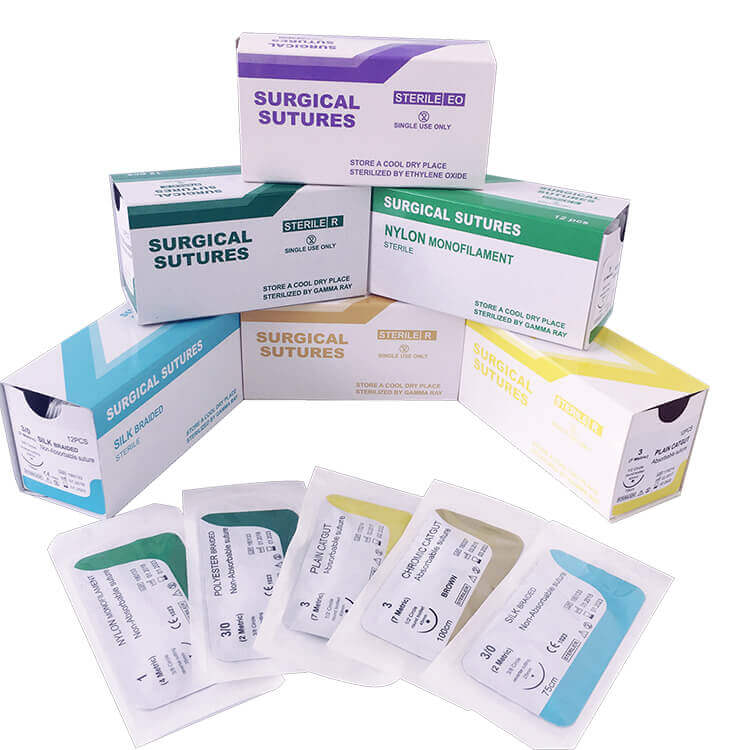
Polyglactin 910 Suture (E20008)
Polyglactin 910 is the world's most widely used absorbable suture. Its generic equivalent — Polyglactin 910 — is a braided copolymer of 90% glycolide and 10% L-lactide, coated for smooth tissue passage. Key performance parameters:
- Absorption: 56–70 days via hydrolysis
- Tensile strength retention: ~75% at 2 weeks / ~50% at 3 weeks
- Structure: Braided — excellent knot security
- Sterilization: Ethylene oxide (EO)
- Colors: Violet / Undyed
- USP sizes: 6/0 – 2
Polyglactin 910 is the go-to absorbable suture for general surgery, OB/GYN, ophthalmic, and pediatric applications. For procurement teams switching from premium-priced sutures to generic surgical sutures China suppliers manufacture, the clinical performance difference is negligible when buying from a CE and ISO 13485-certified supplier.
→ View Polyglactin 910 Suture (E20008) full specifications
Poliglecaprone 25 Suture (E20010)
Poliglecaprone 25 is monofilament absorbable suture, favored in plastic surgery and skin closure for its smooth passage and minimal tissue drag. Its generic equivalent — Poliglecaprone 25 — is a copolymer of glycolide and epsilon-caprolactone.
- Absorption: 90–120 days via hydrolysis
- Tensile strength retention: ~50–60% at 1 week / ~20–30% at 2 weeks (early strength loss — designed for superficial tissue)
- Structure: Monofilament — lowest tissue drag of absorbable sutures
- Sterilization: Ethylene oxide (EO)
- Colors: Violet / Undyed
- USP sizes: 6/0 – 2
Key use case: subcuticular running skin closure where the suture must pass smoothly through the dermis without drag, and where suture removal is not planned. The undyed version is preferred for superficial placement where color visibility through skin could be an aesthetic concern.
→ View Poliglecaprone 25 Suture (E20010) full specifications
Polydioxanone (PDO) Suture (E20009)
Polydioxanone is the clinical reference for long-term absorbable monofilament sutures. Its generic equivalent — Polydioxanone (PDO) — offers the longest tensile strength retention of any synthetic absorbable suture.
- Absorption: ~180 days via hydrolysis
- Tensile strength retention: ~70% at 2 weeks / ~50% at 4 weeks / ~25% at 6 weeks
- Structure: Monofilament — smooth passage, low bacterial adhesion
- Sterilization: Ethylene oxide (EO)
- Colors: Violet / Undyed
- USP sizes: 6/0 – 2
PDO is the preferred suture wherever wound support must extend beyond the 60–90 day range of PGA or Polyglactin 910. Critical applications include fascial and abdominal wall closure, pediatric cardiovascular surgery, and tendon repair. The monofilament structure also reduces infection risk compared to braided absorbables in deep tissue applications.
→ View Polydioxanone Suture (E20009) full specifications
Polypropylene Monofilament Suture (E20004)
Prolene (Ethicon) is the global reference for cardiovascular and vascular surgery sutures. Its generic equivalent — Polypropylene monofilament — is completely biologically inert and the only truly permanent, non-degrading monofilament suture material.
- Permanence: Fully inert — does not degrade or lose strength over time
- Tissue drag: Lowest of any suture material — critical for running vascular anastomosis sutures
- Elasticity: Unique memory accommodates post-operative vessel pulsation and tissue swelling
- Sterilization: Gamma Radiation
- Color: Blue
- USP sizes: 6/0 – 3
For cardiovascular procurement specifically, polypropylene is non-negotiable — no other material combines permanent inertness, low drag, and elasticity for vascular anastomosis. Procurement teams sourcing polypropylene equivalents from generic surgical sutures China manufacturers should verify USP size range (particularly fine sizes 6/0–4/0 for vascular work) and needle type availability (taper needles for vessel wall work).
→ View Polypropylene Suture (E20004) full specifications
Polyester Braided Suture (E20002)
Polyester Braided is the clinical standard for cardiovascular valve surgery and high-tension permanent fixation. Its generic equivalent — Polyester Braided — offers the highest tensile strength of any braided suture and does not degrade in tissue.
- Permanence: Truly permanent — no degradation unlike silk
- Tensile strength: Highest of all braided sutures
- Knot security: Excellent — braided construction provides superior knot tie-down
- Sterilization: Gamma Radiation
- Colors: Green / Blue
- USP sizes: 6/0 – 2
The key distinction from polypropylene for cardiovascular use: polyester braided is preferred for valve repair and annuloplasty where knot security is paramount; polypropylene monofilament is preferred for vascular anastomosis where smooth passage through vessel walls is the priority.
→ View Polyester Braided Suture (E20002) full specifications
Polyglycolic Acid (PGA) Suture (E20007)
Polyglycolic Acid (PGA) is one of the earliest synthetic absorbable sutures and still widely used in general surgery and GI procedures. Its generic equivalent — Polyglycolic Acid (PGA) — offers reliable hydrolytic absorption and excellent knot security.
- Absorption: 60–90 days via hydrolysis
- Tensile strength retention: ~65% at 2 weeks / ~35% at 3 weeks
- Structure: Braided — good knot security
- Sterilization: Ethylene oxide (EO)
- Colors: Violet / Undyed
- USP sizes: 6/0 – 2
PGA vs Polyglactin 910: Both are braided absorbables with similar applications. Polyglactin 910 has a smoother coating, absorbs slightly faster, and has marginally better knot security. PGA is often the more cost-effective choice for high-volume general surgery procurement where the performance difference is clinically insignificant.
→ View PGA Suture (E20007) full specifications
How to Evaluate Generic Surgical Sutures China Suppliers — 6-Point Checklist
The quality of generic surgical sutures China manufacturers offer varies significantly between suppliers. Here is what to verify before placing bulk orders:
1. CE Marking — Not Optional for EU and Gulf Markets
CE marking under EU MDR (Medical Device Regulation) is the minimum requirement for importing sutures into EU member states and most Gulf Cooperation Council (GCC) countries. Request the CE Declaration of Conformity (DoC) and verify the notified body number. Even Medical carries CE marking across all 10 suture materials.
2. ISO 13485 Certification
ISO 13485 is the international quality management standard for medical device manufacturers. It covers design, production, and distribution processes. Request the ISO 13485 certificate and verify it covers suture manufacturing specifically — not just a general scope certificate. ISO 13485 combined with CE is the standard documentation package for international suture import.
3. Batch Sterility Certificates
Every shipment should include batch-specific sterility certificates — not a general product sterility certificate. For EO-sterilized sutures (absorbable synthetic), verify EO residual validation. For gamma-irradiated sutures, verify 25 kGy dose validation. This documentation is essential for hospital procurement audits and import inspections.
4. USP Size Range Coverage
Confirm the supplier can deliver your required USP sizes. Most Chinese suture suppliers cover the standard 6/0–2 range. For cardiovascular procurement, verify fine size availability (6/0, 5/0, 4/0) and needle type options (taper, taper cutting). For polypropylene, confirm sizes up to 3 are available.
5. Needle Specifications
Needle type, size, and curvature must match your clinical requirements. Request the full needle specification list — cutting, reverse cutting, taper, taper cutting, blunt — and confirm needle size range (6mm–50mm standard). For cardiovascular and ophthalmic work, verify fine needle availability and swaged attachment consistency.
6. OEM and Private Label Capability
If you are building a regional brand or reselling under your own label, confirm the supplier can provide custom packaging, multilingual box printing, and your brand name on the inner foil pouches. Verify minimum quantities for OEM programs and lead time for custom packaging design approval.
Why Generic Surgical Sutures China Manufacturers Are Cost-Effective
The price difference between branded sutures and generic surgical sutures China suppliers offer comes down to manufacturing overhead, not material quality. CE and ISO 13485-certified Chinese manufacturers operate at scale, with lower labor costs and established raw material supply chains, passing the savings directly to bulk buyers without compromising on pharmacopoeial compliance or regulatory documentation.
For hospital procurement teams, GPOs, and regional distributors, switching to verified generic surgical sutures China suppliers can reduce suture line costs by 40–70% without clinical compromise — provided supplier verification follows the 6-point checklist above.
Related Sourcing Resources
- Browse certified surgical sutures — full polymer range with CE and ISO 13485 documentation
- Powder-free sterile latex surgical gloves and operating room barrier supplies
- OEM & private-label suture manufacturing — custom packaging, multilingual labeling, MOQ terms
- Request a bulk quote — 24-hour response with pricing, lead time, and sample options
For essential suture chemistry, tensile retention profiles, and needle attachment types, explore our foundation review in surgical suture overview and evaluate bulk tender packaging in our buyer's guide to buying surgical sutures in bulk. To ensure seamless OR compatibility between surgical incision tools and wound closure materials, review standard blade geometries in our complete surgical blade sizes reference guide or explore blade manufacturing in surgical blade overview.