
(function(c,l,a,r,i,t,y){ c[a]=c[a]||function(){(c[a].q=c[a].q||[]).push(arguments)}; t=l.createElement(r);t.async=1;t.data-privacy-src="https://www.clarity.ms/tag/"+i; y=l.getElementsByTagName(r)[0];y.parentNode.insertBefore(t,y); })(window, document, "clarity", "script", "gn944t9uep");

Blog

Pressemitteilungen, Aktuelle Nachrichten, Updates

Dental Alginate Shelf Life and Storage: Packaging, Moisture Barriers & Lab Economics

Dental irreversible hydrocolloid (alginate) remains the global benchmark for preliminary impressions, diagnostic study casts, and orthodontic aligner manufacturing due to its cost-efficiency, rapid setting kinetics, and patient tolerance. However, dental laboratories and clinic purchasing departments frequently face unexplained material deterioration—characterized by shortened working times, lumpy consistency, reduced tear strength, and chalky stone model surfaces. This comprehensive engineering guide examines the [...]

Von |2026-10-27T14:10:26+08:00November 14, 2026|Kategorien: Dental Materials & Impression|Kommentare deaktiviert für Dental Alginate Shelf Life and Storage: Packaging, Moisture Barriers & Lab Economics

Blood Collection Tube Additives: Gel Separators vs Clot Activators in Clinical Serum Centrifugation

In modern clinical laboratory pathology, accurate biochemical profiling—including electrolyte panels, cardiac enzymes (Troponin, CK-MB), therapeutic drug monitoring (TDM), and endocrine assays—demands high-purity serum free from cellular contamination and in vitro metabolic consumption. Selecting the correct serum vacuum blood collection tube architecture—specifically comparing SST Gel Separator Tubes (Gold / Yellow Top) against Plain Clot Activator Tubes (Red Top)—is a decisive operational [...]

Von |2026-10-26T14:02:08+08:00November 13, 2026|Kategorien: Infusion, Phlebotomy & Diagnostics|Kommentare deaktiviert für Blood Collection Tube Additives: Gel Separators vs Clot Activators in Clinical Serum Centrifugation

Hospital Disinfection Wipes: 70% Isopropyl Alcohol vs Quaternary Ammonium Compounds in Surface Germicidal Protocols

Healthcare-associated infections (HAIs) transmitted via non-critical environmental surfaces—such as bed rails, infusion pump keypads, diagnostic monitors, and hemodialysis stations—impose immense clinical and financial burdens on modern hospitals. Surface disinfection wipes serve as the frontline defense against pathogen persistence. However, selecting between 70% Isopropyl Alcohol (IPA) wipes and Quaternary Ammonium Compound (Quat) wipes involves a critical balance between rapid germicidal evaporation, [...]

Von |2026-10-26T13:49:54+08:00November 12, 2026|Kategorien: Infection Control & Disinfection|Kommentare deaktiviert für Hospital Disinfection Wipes: 70% Isopropyl Alcohol vs Quaternary Ammonium Compounds in Surface Germicidal Protocols

Surgical Scalpel Blade Shapes and Incision Geometry: Clinical Matching for #10, #11, #12 and #15

In operating room precision surgery, tissue incision geometry dictates not only the initial entry dynamics and visibility of the operative field, but directly governs postoperative tensile wound healing, epidermal edge approximation, and cosmetic scar formation. While all surgical blades comply with the fitment standards of ISO 7740, their curved bellies, angled tips, and specialized cutting radii create vastly divergent biomechanical [...]

Von |2026-10-26T13:38:16+08:00November 11, 2026|Kategorien: Surgical Consumables & Wound Closure|Kommentare deaktiviert für Surgical Scalpel Blade Shapes and Incision Geometry: Clinical Matching for #10, #11, #12 and #15

Butterfly Blood Collection Needles vs Straight Multi-Sample Needles: Pediatric Vein Access, Hemolysis Prevention & Sharps Safety

In hospital pathology laboratories and outpatient phlebotomy clinics, diagnostic accuracy hinges upon the integrity of the pre-analytical phase. Over 60%–70% of laboratory specimen errors originate prior to analyzer testing, with in vitro sample hemolysis, insufficient draw volume (QNS), and accidental needle stick injuries (NSIs) presenting chronic clinical and financial challenges. Choosing between Winged Blood Collection Sets (Butterfly Needles) and Straight [...]

Von |2026-10-26T14:01:46+08:00November 10, 2026|Kategorien: Infusion, Phlebotomy & Diagnostics|Kommentare deaktiviert für Butterfly Blood Collection Needles vs Straight Multi-Sample Needles: Pediatric Vein Access, Hemolysis Prevention & Sharps Safety

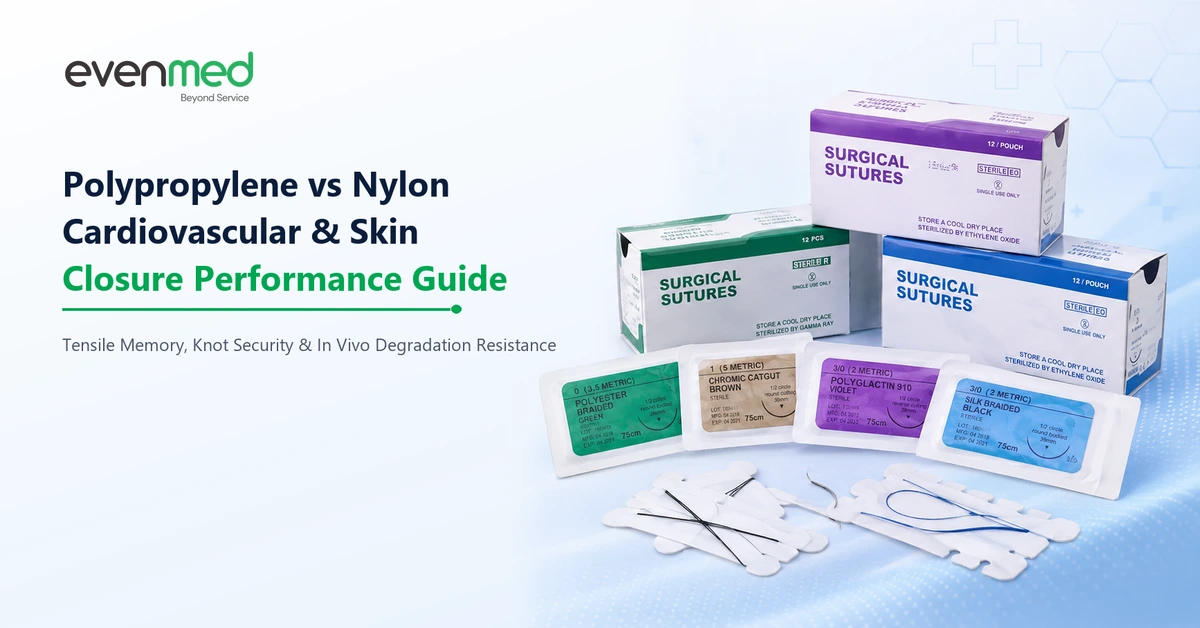
Polypropylene vs Nylon Sutures in Cardiovascular and Cuticular Closure: Tensile Memory, Knot Security & In Vivo Stability

In soft tissue surgery, selecting the ideal non-absorbable monofilament suture is a fundamental balance between handling ergonomics and permanent mechanical stability. While both Polypropylene (e.g., Prolene equivalent) and Nylon / Polyamide (e.g., Ethilon equivalent) provide smooth monofilament tissue glide and low biological reactivity, their molecular structure, knot security, tensile retention in vivo, and handling memory diverge substantially. For operating theatre [...]

Von |2026-10-26T13:42:03+08:00November 9, 2026|Kategorien: Surgical Consumables & Wound Closure|Kommentare deaktiviert für Polypropylene vs Nylon Sutures in Cardiovascular and Cuticular Closure: Tensile Memory, Knot Security & In Vivo Stability

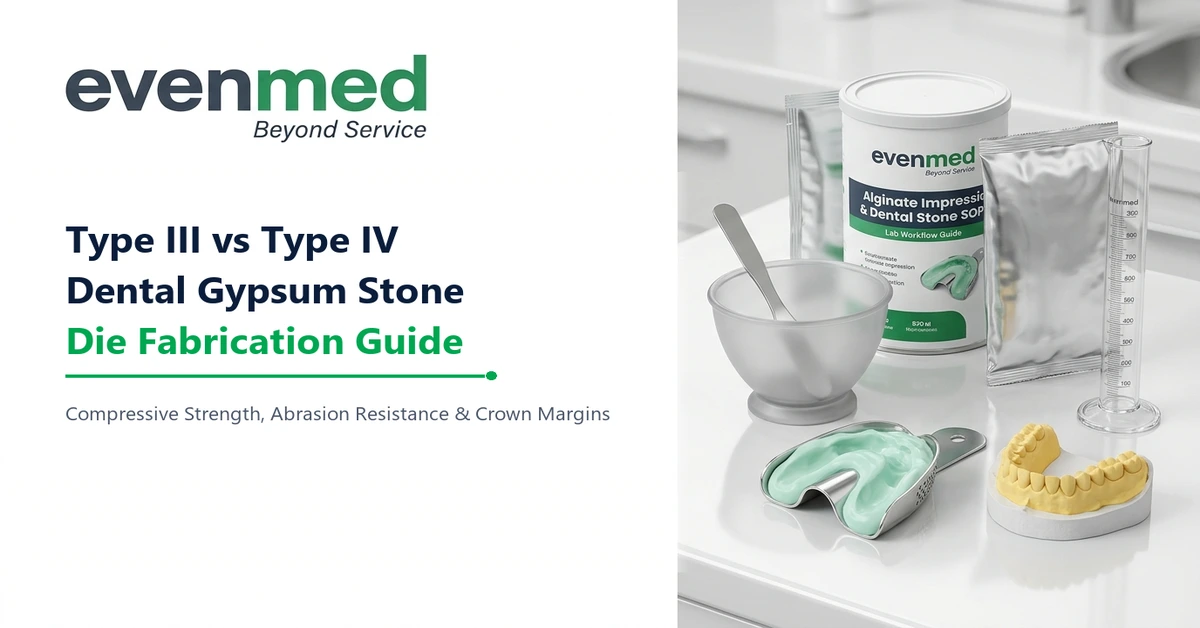
Type III vs Type IV Dental Stone: Compressive Strength, Expansion Control & Die Fabrication

In dental laboratory prosthodontics, the dimensional fidelity of master working casts and sectioned dies directly dictates the marginal fit, occlusal harmony, and longevity of fixed indirect restorations—including zirconia crowns, cast metal copings, and implant abutments. While both Type III Dental Stone (Model Stone / Plaster) and Type IV Dental Stone (Die Stone / High-Strength, Low-Expansion Stone) derive from calcium sulfate [...]

Von |2026-10-26T13:48:01+08:00November 8, 2026|Kategorien: Dental Materials & Impression|Kommentare deaktiviert für Type III vs Type IV Dental Stone: Compressive Strength, Expansion Control & Die Fabrication

Chlorhexidine Skin Preparation: Single-Dose Applicators vs Multi-Bottle Solutions in Blood Culture Contamination Reduction

Bloodstream infections (BSIs) represent one of the most critical healthcare-associated infections worldwide. However, a major hidden challenge confronting clinical laboratories, infectious disease specialists, and hospital CFOs is blood culture contamination (BCC)—false-positive blood cultures caused by commensal skin flora (such as Staphylococcus epidermidis, Cutibacterium acnes, and Corynebacterium spp.) introduced into culture bottles during venipuncture. With real-world health economic studies demonstrating that [...]

Von |2026-10-26T13:49:49+08:00November 7, 2026|Kategorien: Infection Control & Disinfection|Kommentare deaktiviert für Chlorhexidine Skin Preparation: Single-Dose Applicators vs Multi-Bottle Solutions in Blood Culture Contamination Reduction

Surgical Scalpel Handle and Blade Compatibility: Fitment Standards, Ergonomics & Operating Room Safety

In modern operating theatres, the surgical scalpel remains the ultimate instrument of precision tissue dissection. Yet despite its fundamental role in surgical craft, incompatibilities between scalpel handles and interchangeable surgical blades continue to cause operative delays, compromised tactile feedback, and perilous sharps injuries during intraoperative assembly and disassembly. Understanding the dimensional fitment standards set forth in ISO 7740, metallurgical behavior, [...]

Von |2026-10-26T13:38:10+08:00November 6, 2026|Kategorien: Surgical Consumables & Wound Closure|Kommentare deaktiviert für Surgical Scalpel Handle and Blade Compatibility: Fitment Standards, Ergonomics & Operating Room Safety

Luer Lock vs Luer Slip Syringes: Connection Mechanics, Leakage Pressure & Clinical Procurement

In hospital medication administration, intensive care unit (ICU) hemodynamic monitoring, and radiological contrast imaging, the physical interface between a hypodermic syringe and intravascular access devices is a vital control point. Selecting between Luer Lock and Luer Slip syringe designs is not merely a matter of nursing convenience—it directly governs connection integrity under hydraulic pressure, medication loss via dead space, clinician [...]

Von |2026-10-26T13:51:01+08:00November 5, 2026|Kategorien: Infusion, Phlebotomy & Diagnostics|Kommentare deaktiviert für Luer Lock vs Luer Slip Syringes: Connection Mechanics, Leakage Pressure & Clinical Procurement
Nach oben gehen