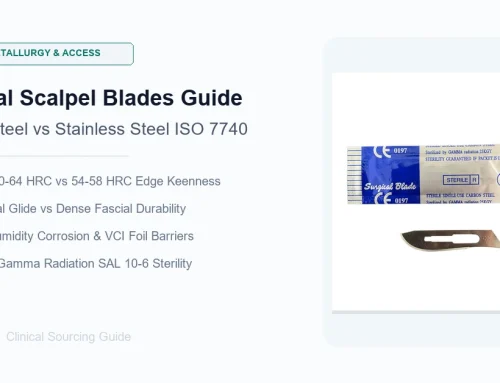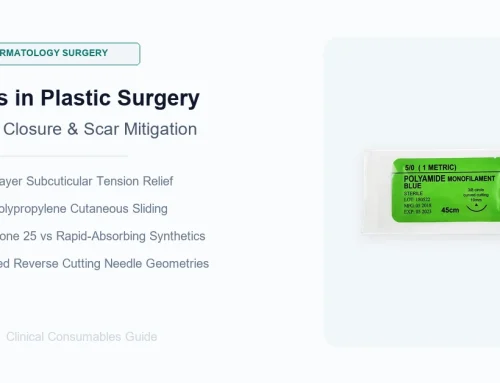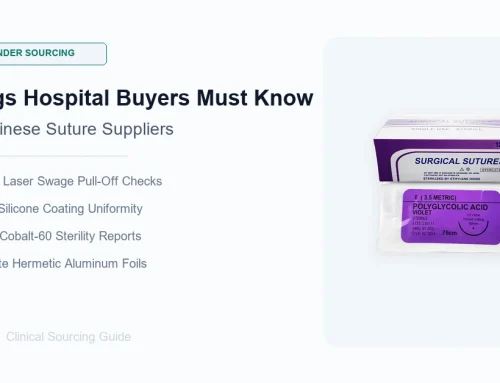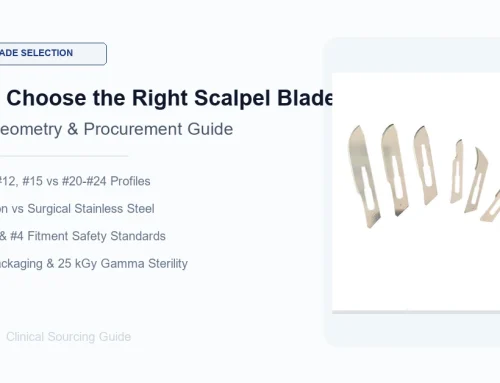




Selecting the right хирургический шов directly impacts wound healing outcomes and infection rates. A 2022 study in the Journal of Wound Care found that improper suture selection increases dehiscence risk by 18% and infection by 12%. This guide covers every major suture type, their mechanical properties, clinical applications, and how to choose the best option for each surgical scenario.
We will break down absorbable and non-absorbable materials, natural versus synthetic origins, and monofilament versus braided structures. Practical data tables, pricing factors, and red flags for buyers are included throughout.
Suture Classification Overview
Surgical sutures are classified by three key characteristics: absorbability, material origin, and physical structure. Understanding these categories helps narrow down options for specific tissue types and healing requirements.
Absorbable vs Non-Absorbable
Absorbable sutures break down via hydrolysis or enzymatic degradation. They eliminate the need for removal, making them ideal for internal tissues. Non-absorbable sutures remain permanently unless removed, providing long-term support for slow-healing structures like tendons or heart valves.
Natural vs Synthetic
Natural sutures like silk and catgut come from animal sources. They handle well but trigger more tissue reaction. Synthetic sutures (nylon, polyester, PGA) offer predictable strength loss, lower reactivity, and consistent performance across batches.
Monofilament vs Braided
Monofilament sutures are single strands that resist bacterial colonization. They pass through tissue smoothly but require more knots for security. Braided sutures offer better knot security and handling but have higher infection risk due to interstices where bacteria can hide.
Рассасывающиеся швы
Absorbable sutures are the most common choice for internal closures. They maintain tensile strength long enough for wound healing, then dissolve without foreign body persistence.
Natural Absorbable Sutures
Plain catgut retains strength for 7–10 days and absorbs completely by 70 days. It causes significant tissue inflammation, which can delay healing in sensitive patients. Chromic catgut is treated with chromium salts to resist enzymatic breakdown, extending strength retention to 21–28 days and full absorption to 90 days. Both are used in mucosal layers, obstetrics, and urology where rapid absorption is acceptable.
Синтетические рассасывающиеся швы
Synthetic absorbables dominate modern surgery due to predictable performance and minimal tissue reaction. PGA sutures (polyglycolic acid) retain 50% strength at 21 days and fully absorb in 60–90 days. They are braided for excellent handling, making them a workhorse for general surgery, subcutaneous closure, and ligation.
Polyglactin 910 (coated Vicryl® equivalent) retains 75% strength at 14 days and 50% at 21 days. The coating reduces drag through tissue and minimizes sawing effect. It is preferred for soft tissue approximation, GI anastomoses, and orthopedic procedures where moderate strength duration is needed.
Poliglecaprone 25 (Monocryl® equivalent) is a monofilament that retains 50–60% strength at 7 days and fully absorbs by 91–119 days. Its smooth passage and minimal tissue trauma make it ideal for subcuticular skin closure, especially in cosmetic and pediatric surgery (often reinforced with sterile wound skin closure strips to minimize tension and scarring).
PDS sutures (polydioxanone) provide the longest strength retention of any absorbable suture, maintaining 50% strength at 6 weeks and full absorption at 180–210 days. The monofilament structure resists infection well. PDS is used in pediatric cardiac surgery, fascial closure in high-risk patients, and slow-healing tissues like tendons and ligaments.
Absorbable Suture Comparison Table
| Suture Type | Strength Retention (50%) | Full Absorption | Structure | Tissue Reaction | Best Applications |
|---|---|---|---|---|---|
| Обыкновенный катгут | 7–10 days | 70 days | Monofilament | Высокий | Mucosa, obstetrics, urology |
| Хромированный катгут | 21–28 days | 90 days | Monofilament | Умеренный | Dental, OB/GYN, mucosal |
| PGA | 21 days | 60–90 days | Braided | Низкий | General surgery, subcutaneous |
| Polyglactin 910 | 21 days | 56–70 days | Braided | Низкий | Soft tissue, GI, orthopedic |
| Poliglecaprone 25 | 7 days | 91–119 days | Monofilament | Низкий | Subcuticular skin closure |
| PDS | 42 days | 180–210 days | Monofilament | Very Low | Pediatric cardiac, fascia, tendon |
Нерассасывающиеся швы
Non-absorbable sutures provide permanent wound support. They are used where prolonged tensile strength is required or where suture removal is feasible.
Natural Non-Absorbable
Silk sutures are braided from natural fibroin protein. They offer the best handling and knot security of any suture material, with a soft, supple feel. Silk loses 30–50% of its tensile strength within one year due to enzymatic degradation, so it is not truly permanent. It is used in cardiovascular surgery, ophthalmic procedures, and dental surgery where handling is critical.
Synthetic Non-Absorbable
Nylon sutures (polyamide) are monofilament with high elasticity and memory. They retain strength indefinitely but lose 15–25% per year in vivo. Nylon is the standard for skin closure due to its low reactivity and smooth passage. It is also used in microsurgery and nerve repair.
Polyester sutures (Mersilene® or Ethibond® equivalent) are braided with high tensile strength and zero strength loss over time. They are coated for smoother passage and reduced tissue drag. Polyester is the material of choice for heart valve replacement, tendon repair, and ligament reconstruction where maximum permanent strength is required.
Polypropylene (Prolene® equivalent) is a monofilament with extremely low tissue reactivity and no strength degradation. It has high memory, requiring more knots for security. Polypropylene is preferred in cardiovascular and vascular surgery, contaminated wounds, and skin closure where infection risk is high.
Non-Absorbable Suture Comparison Table
| Suture Type | Strength Loss | Structure | Tissue Reaction | Knot Security | Best Applications |
|---|---|---|---|---|---|
| Silk | 30–50% at 1 year | Braided | Умеренный | Превосходно | Cardiovascular, ophthalmic, dental |
| Nylon | 15–25% at 1 year | Monofilament | Низкий | Good | Skin closure, microsurgery |
| Polyester | None | Braided | Низкий | Превосходно | Valve replacement, tendon repair |
| Полипропилен | None | Monofilament | Very Low | Fair | Vascular, contaminated wounds |
How to Choose the Right Suture
Selecting the correct suture requires evaluating tissue type, healing rate, infection risk, and mechanical demands. Below are the critical factors to consider.
Tissue Type and Healing Speed
Skin heals in 7–14 days, so absorbable sutures like poliglecaprone 25 or non-absorbable nylon work well. Fascia and tendons take 6–12 weeks to regain strength, requiring PDS or polyester. Mucosal tissues heal rapidly and tolerate catgut or PGA. For detailed comparisons, see our suture types guide.
Infection Risk
Braided sutures have 2–3 times higher infection rates than monofilament in contaminated wounds. A 2019 meta-analysis in Surgical Infections found monofilament reduced surgical site infection by 34% compared to braided. For dirty or infected fields, use polypropylene or nylon. For clean wounds, braided PGA or polyglactin 910 are acceptable.
Tensile Strength Requirements
High-tension areas like abdominal fascia require sutures with 50% strength retention at 4–6 weeks. PDS or polyester are appropriate. Low-tension areas like subcutaneous tissue can use PGA or polyglactin 910. For more on comparing these, read our PGA vs polyglactin vs PDS article.
Patient Factors
Elderly patients and those with diabetes or poor nutrition heal slower. Use sutures with longer strength retention like PDS or polyester. Pediatric patients heal faster and benefit from absorbable sutures to avoid removal stress. Immunocompromised patients need monofilament sutures to reduce infection risk.
Suture Gauge Guide
Suture gauge is measured by USP (United States Pharmacopeia) size. Lower numbers indicate thicker sutures with higher tensile strength. Using the wrong gauge can cause tissue tearing or inadequate closure.
| USP Size | Diameter (mm) | Tensile Strength (kg) | Typical Use |
|---|---|---|---|
| 2-0 to 0 | 0.3–0.5 | 3.0–5.5 | Fascia, tendon, retention sutures |
| 3-0 | 0.2–0.3 | 1.5–3.0 | Skin (body), GI closure, ligation |
| 4-0 | 0.15–0.2 | 0.8–1.5 | Skin (face), vessel ligation |
| 5-0 | 0.1–0.15 | 0.5–0.8 | Hand surgery, pediatric, eyelid |
| 6-0 to 8-0 | 0.05–0.1 | 0.2–0.5 | Ophthalmic, microsurgery, nerve repair |
| 9-0 to 11-0 | 0.02–0.04 | 0.05–0.2 | Vascular microsurgery, ophthalmic |
Common Red Flags When Buying Sutures
Buyers should watch for these issues when sourcing sutures. First, verify that the packaging is intact and sterile. Damaged packaging compromises sterility and increases infection risk. Second, check expiration dates. Absorbable sutures lose strength over time, especially PGA and polyglactin 910 which degrade faster in storage.
Third, confirm that the needle type matches your procedure. Common needle types include cutting (for skin), reverse cutting (for tough tissue), and taper point (for soft internal tissue). A mismatch causes tissue trauma or difficult passage. Fourth, ensure CE marking or FDA clearance is current. For guidance on certifications, see our CE/ISO/FDA certification guide.
Fifth, watch for inconsistent dye quality or color fading on colored sutures. This can indicate poor manufacturing standards. Sixth, request lot-specific tensile strength test reports from suppliers. Reputable manufacturers like Even Medical provide these on request.
Seventh, be cautious of sutures that feel brittle or stiff out of the package. This can indicate improper storage or age degradation. Eighth, verify that the suture material matches what is stated on the label—counterfeit products sometimes substitute cheaper materials.
Pricing Factors for Surgical Sutures
Suture pricing varies by material, structure, and brand. Absorbable sutures cost 20–40% more than non-absorbable due to complex manufacturing. Monofilament sutures are generally 10–15% cheaper than braided equivalents. Branded sutures (Ethicon, Medtronic) carry a 30–50% premium over generic or OEM products.
Buying in bulk from manufacturers like Even Medical reduces per-unit costs by 40–60%. For hospitals and distributors, buying surgical sutures in bulk with customized needle and packaging options provides the best value. OEM services allow you to brand sutures under your own label, which is common for regional distributors. Learn more in our OEM medical consumables guide.
Needle type also affects price. Premium swaged needles with diamond-shaped points cost more than standard reverse-cutting needles. Expect to pay 5–15% more for atraumatic needle-suture combinations versus threaded needles. Sourcing directly from surgical suture manufacturers in China can further reduce costs while maintaining quality.
Volume discounts typically start at 1,000 units per order, with deeper discounts at 10,000 units. Custom packaging adds 5–10% to the base price but can differentiate your brand. For more on sourcing strategy, read our guide to sourcing medical consumables from China.
Related Medical Consumables
Sutures are often used alongside other surgical supplies. Surgical blades are required for incision and suture removal. For size selection, see our surgical blade sizes guide. 70% IPA alcohol swabs и CHG alcohol swabs are used for pre-operative skin antisepsis. For proper usage, read our alcohol pad buyer guide and CHG usage guide.
Other essential items include IV catheters for fluid administration, blood collection tubes for lab testing, hypodermic needles