



"4/0" refers to the size of the suture, with smaller numbers indicating thinner thread. "3/8C" refers to the length of the needle, with the "C" indicating a curved needle shape.
The material itself is a "resorbable" type of suture, which means it will eventually break down and be absorbed by the body over time, eliminating the need for removal. The suture material is made from a combination of polyglycolic acid braid and lactic acid, both of which are biodegradable materials.
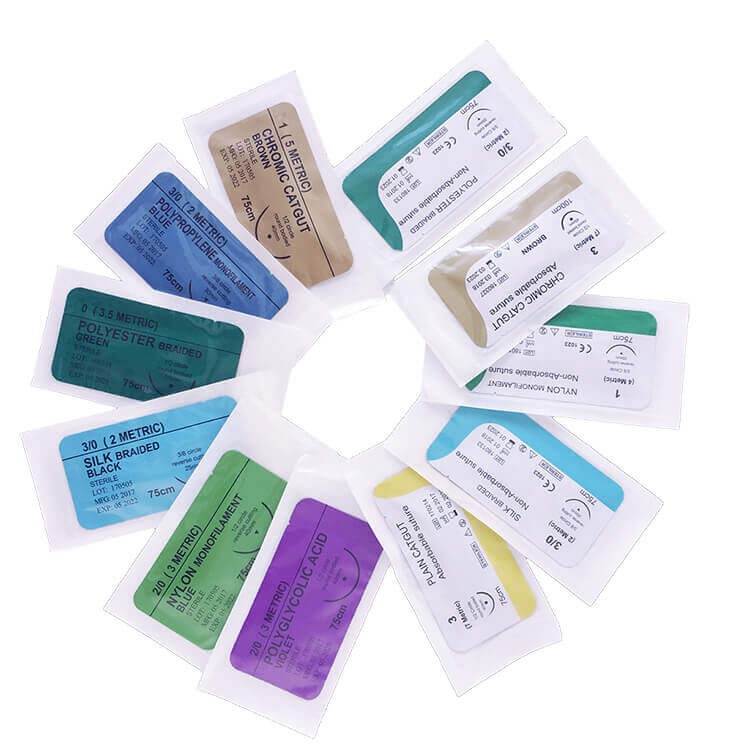
sutura cirúrgica 4
The "20 mm round" description refers to the shape and size of the needle. The round needle shape is typically used for suturing softer tissues, such as skin, while the size of the needle will vary depending on the specific application.
O ácido poliglicólico (PGA) é um polímero sintético comumente utilizado em suturas cirúrgicas devido à sua alta resistência e biodegradabilidade. Tem sido usado por décadas e tem um perfil de segurança bem estabelecido. O ácido láctico é outro material biodegradável comumente usado em suturas cirúrgicas, e muitas vezes é combinado com PGA para melhorar suas propriedades mecânicas.
A combinação de PGA e ácido lático no material de sutura resulta em uma estrutura trançada, que proporciona maior resistência à tração e segurança do nó. A estrutura trançada também reduz o risco da sutura cortar o tecido ou causar danos ao tecido.
Em procedimentos cirúrgicos, o material de sutura é usado para fechar incisões ou feridas. A agulha é normalmente presa a uma extremidade da sutura e a outra extremidade é segurada pelo cirurgião ou passada através do tecido usando um porta-agulha. A agulha é usada para puxar a sutura através do tecido e a sutura é então amarrada para fechar a incisão ou ferida.
Once the wound has healed, the suture material will gradually break down and be absorbed by the body, eliminating the need for removal. The rate of resorption depends on various factors, such as the type of suture material, the location of the wound, and the patient's individual healing process.
Overall, the "4/0 3/8C RESORBABLE NEEDLE 20 mm ROUND POLYGLYCOLIC ACID BRAID + LACTIC ACID" is a commonly used suture material in surgical procedures due to its strength, biodegradability, and established safety profile.
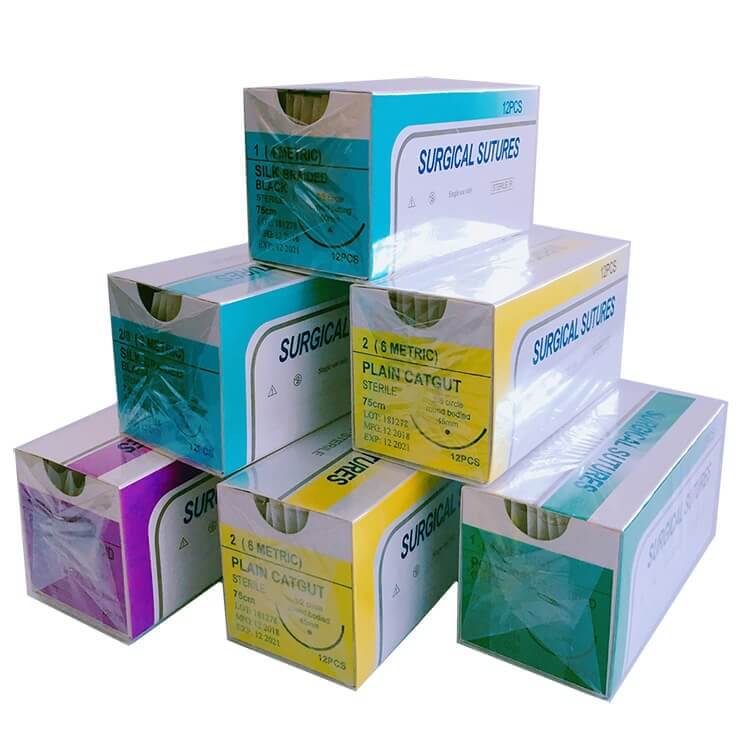
TRANÇA DE ÁCIDO POLIGLICÓLICO + ÁCIDO LÁTICO vs ÁCIDO POLICLICÓLICO?
O ácido poliglicólico (PGA) e o trançado de ácido poliglicólico + ácido lático são materiais de sutura reabsorvíveis comumente usados em procedimentos cirúrgicos. No entanto, existem algumas diferenças entre os dois.
PGA é um polímero sintético que tem sido usado em suturas cirúrgicas por várias décadas. É conhecida por sua alta resistência e segurança do nó, o que a torna uma escolha popular para suturar tecidos moles, como pele e músculos. As suturas PGA são tipicamente monofilamentares, ou seja, são compostas por um único fio.
A trança de ácido poliglicólico + ácido lático, por outro lado, é um material de sutura trançado feito de uma combinação de PGA e ácido lático. A estrutura trançada fornece maior resistência à tração e segurança do nó em comparação com as suturas de monofilamento. A combinação de PGA e ácido lático resulta em um material de sutura que é forte e biodegradável, pois ambos os materiais são eventualmente absorvidos pelo corpo ao longo do tempo.
Uma vantagem de usar o trançado de ácido poliglicólico + ácido lático sobre o PGA sozinho é que a estrutura trançada reduz o risco da sutura cortar o tecido ou causar dano ao tecido. A estrutura trançada também permite melhor manuseio e amarração dos nós. No entanto, as suturas trançadas podem ser mais propensas a abrigar bactérias em comparação com as suturas monofilamentares.
The choice of suture material will depend on various factors, such as the type of tissue being sutured, the location of the wound, the surgeon's preference, and the patient's individual needs. Both PGA and Polyglycolic acid braid + Lactic acid are safe and effective suture materials with established track records in surgical procedures.
Optimal tension-free suturing begins with clean, atraumatic cutting; review scalpel blade geometries in our surgical blade sizes and numbers guide. To compare braided polyglycolic acid against monofilament absorbables and permanent non-absorbables, read our types of sutures overview, or evaluate tensile strength retention and absorption timelines in surgical sutures and the healing process. For detailed product specifications, needle curvature options, and bulk procurement, view our polyglycolic acid (PGA) sutures.