



"4/0" refers to the size of the suture, with smaller numbers indicating thinner thread. "3/8C" refers to the length of the needle, with the "C" indicating a curved needle shape.
The material itself is a "resorbable" type of suture, which means it will eventually break down and be absorbed by the body over time, eliminating the need for removal. The suture material is made from a combination of polyglycolic acid braid and lactic acid, both of which are biodegradable materials.
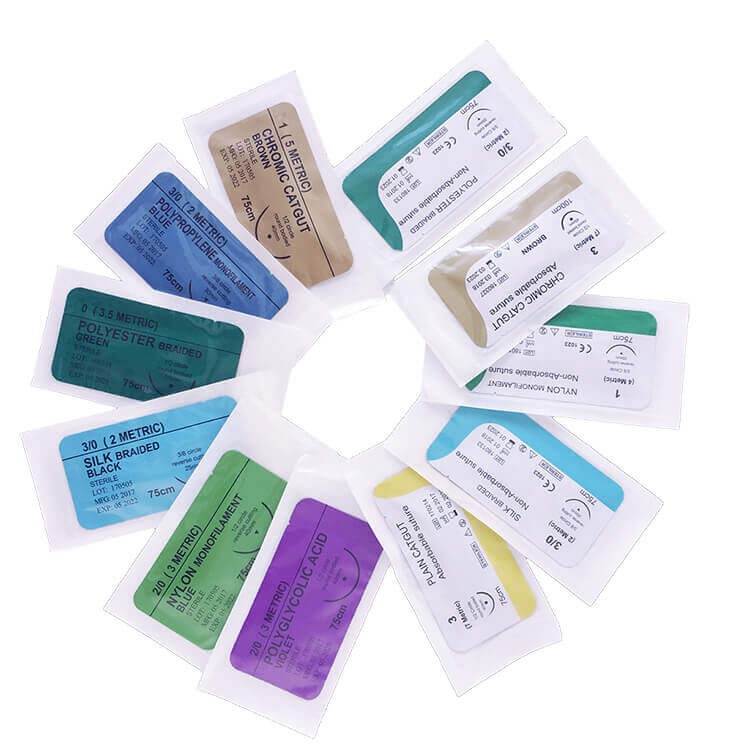
sutura quirúrgica 4
The "20 mm round" description refers to the shape and size of the needle. The round needle shape is typically used for suturing softer tissues, such as skin, while the size of the needle will vary depending on the specific application.
El ácido poliglicólico (PGA) es un polímero sintético que suele utilizarse en suturas quirúrgicas por su gran resistencia y biodegradabilidad. Se utiliza desde hace décadas y tiene un perfil de seguridad bien establecido. El ácido láctico es otro material biodegradable que suele utilizarse en suturas quirúrgicas, y a menudo se combina con el PGA para mejorar sus propiedades mecánicas.
La combinación de PGA y ácido láctico en el material de sutura da lugar a una estructura trenzada, que proporciona una mayor resistencia a la tracción y seguridad del nudo. La estructura trenzada también reduce el riesgo de que la sutura corte el tejido o lo dañe.
En las intervenciones quirúrgicas, el material de sutura se utiliza para cerrar incisiones o heridas. La aguja suele estar unida a un extremo de la sutura, y el cirujano sujeta el otro extremo o lo pasa a través del tejido utilizando un portaagujas. La aguja se utiliza para tirar de la sutura a través del tejido, y la sutura se ata para cerrar la incisión o la herida.
Once the wound has healed, the suture material will gradually break down and be absorbed by the body, eliminating the need for removal. The rate of resorption depends on various factors, such as the type of suture material, the location of the wound, and the patient's individual healing process.
Overall, the "4/0 3/8C RESORBABLE NEEDLE 20 mm ROUND POLYGLYCOLIC ACID BRAID + LACTIC ACID" is a commonly used suture material in surgical procedures due to its strength, biodegradability, and established safety profile.
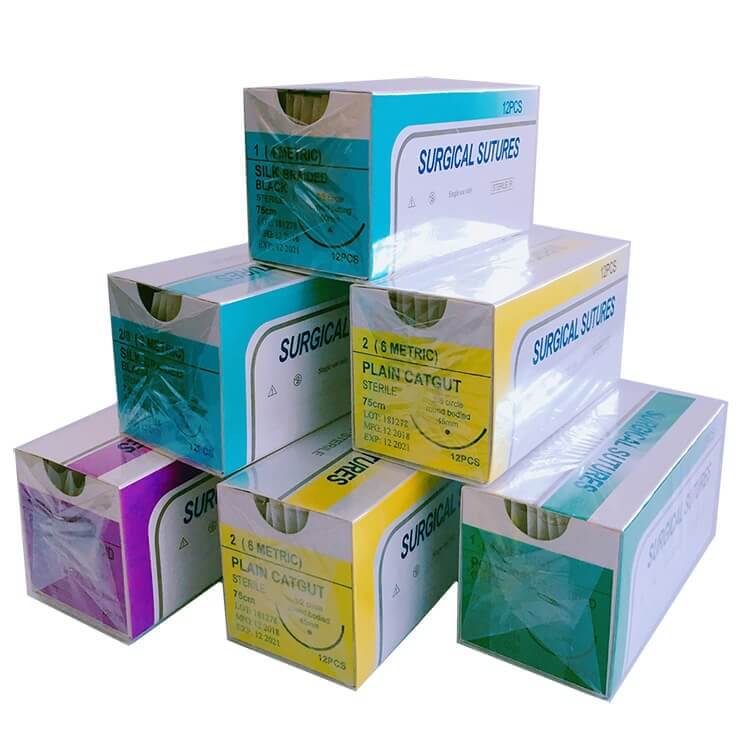
¿ÁCIDO POLIGLICÓLICO TRENZA + ÁCIDO LÁCTICO vs ÁCIDO POLIGLICÓLICO?
El ácido poliglicólico (PGA) y la trenza de ácido poliglicólico + ácido láctico son dos materiales de sutura reabsorbibles utilizados habitualmente en intervenciones quirúrgicas. Sin embargo, existen algunas diferencias entre ambos.
El PGA es un polímero sintético que se utiliza en suturas quirúrgicas desde hace varias décadas. Es conocido por su gran resistencia y seguridad de los nudos, lo que lo convierte en una elección popular para suturar tejidos blandos como la piel y los músculos. Las suturas de PGA suelen ser monofilamento, es decir, están compuestas por un único hilo.
El trenzado de ácido poliglicólico + ácido láctico, por su parte, es un material de sutura trenzado fabricado a partir de una combinación de PGA y ácido láctico. La estructura trenzada proporciona una mayor resistencia a la tracción y seguridad del nudo en comparación con las suturas monofilamento. La combinación de PGA y ácido láctico da como resultado un material de sutura resistente y biodegradable, ya que ambos materiales acaban siendo absorbidos por el organismo con el paso del tiempo.
Una de las ventajas de utilizar ácido poliglicólico trenzado + ácido láctico frente al PGA solo es que la estructura trenzada reduce el riesgo de que la sutura corte el tejido o provoque daños tisulares. La estructura trenzada también permite un mejor manejo y anudado de los nudos. Sin embargo, las suturas trenzadas pueden ser más propensas a albergar bacterias que las suturas monofilamento.
The choice of suture material will depend on various factors, such as the type of tissue being sutured, the location of the wound, the surgeon's preference, and the patient's individual needs. Both PGA and Polyglycolic acid braid + Lactic acid are safe and effective suture materials with established track records in surgical procedures.
Optimal tension-free suturing begins with clean, atraumatic cutting; review scalpel blade geometries in our surgical blade sizes and numbers guide. To compare braided polyglycolic acid against monofilament absorbables and permanent non-absorbables, read our types of sutures overview, or evaluate tensile strength retention and absorption timelines in surgical sutures and the healing process. For detailed product specifications, needle curvature options, and bulk procurement, view our polyglycolic acid (PGA) sutures.