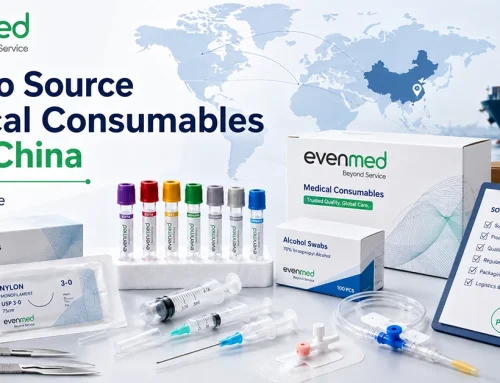




Venous blood collection tubes (evacuated blood collection systems) are fundamental diagnostic consumables utilized across hospital clinical laboratories, blood banks, diagnostic centers, and pathology facilities worldwide. Because different clinical laboratory assays—such as clinical chemistry panels, hematology counts, coagulation profiling, and molecular diagnostics—require specific biological specimens (serum, plasma, or whole blood), blood collection tubes utilize standardized cap color coding to denote internal chemical additives and barrier gels.
Selecting the incorrect tube color, deviating from established Order of Draw protocols, or experiencing inconsistent vacuum draw volumes can cause specimen hemolysis, additive cross-contamination, specimen clotting, and diagnostic error. For overseas healthcare distributors, laboratory procurement managers, and tender contractors, sourcing vacuum blood collection tubes from China requires a rigorous understanding of ISO 6710 manufacturing standards, additive formulations, shelf-life vacuum stability, and supply chain consolidation across complementary phlebotomy disposables.
Standardized Tube Color Coding, Additives, and Clinical Indications
Modern vacuum blood collection tubes conform to international color-coding conventions established under ISO 6710 y CLSI GP41 guidelines. Each tube format contains precise pre-measured chemical reagents designed for specific diagnostic pathways:
| Color de la tapa | Primary Chemical Additive | Specimen Type | Clotting / Centrifugation Time | Primary Clinical Diagnostic Use |
|---|---|---|---|---|
| Red (Plain / Pro-coagulation) | No additive (glass tubes) or micronized Silica Clot Activator spray (PET plastic tubes) | Serum | Clot: 30–60 min; Spin: $1300\text{–}2000\,\text{RCF}$ for 10–15 min | Routine serum biochemistry, clinical immunology, serology, infectious disease antibody screening, blood bank compatibility |
| Gold / Yellow (SST) | Silica Clot Activator + Inert Polyester Gel Barrier | Serum | Clot: 20–30 min; Spin: $1500\text{–}2000\,\text{RCF}$ for 10 min | Comprehensive metabolic panels (CMP), lipid profiles, hormone assays, therapeutic drug monitoring (TDM) |
| Light Blue | 3.2% (0.109 mol/L) Buffered Sodium Citrate (1:9 additive-to-blood ratio) | Citrated Plasma | Spin: $1500\text{–}2000\,\text{RCF}$ for 15 min (Platelet-Poor Plasma) | Coagulation cascade profiling: Prothrombin Time (PT/INR), Activated Partial Thromboplastin Time (aPTT), Fibrinogen, D-Dimer |
| Lavender / Purple | $\text{K}_2\text{EDTA}$ (spray-dried) or $\text{K}_3\text{EDTA}$ (liquid solution) | Whole Blood | No centrifugation (mix gently 8–10 times) | Complete Blood Count (CBC), hematology morphology, blood typing, HbA1c testing, flow cytometry, viral load analysis |
| Verde | Lithium Heparin or Sodium Heparin (spray-dried, 12–30 IU/mL blood) | Heparinized Plasma | Spin immediately: $1300\text{–}2000\,\text{RCF}$ for 10 min | STAT emergency clinical biochemistry, arterial/venous blood gas (electrolytes: $\text{Na}^+, \text{K}^+, \text{Cl}^-$), cardiac enzymes, ammonia |
| Light Green (PST) | Lithium Heparin + Inert Polymer Gel Barrier | Heparinized Plasma | Spin immediately: $1500\text{–}2000\,\text{RCF}$ for 10 min | Rapid STAT plasma biochemistry; combines fast turnaround (no clotting wait) with clean gel physical barrier isolation |
| Gris | Sodium Fluoride (glycolysis inhibitor) + Potassium Oxalate (anticoagulant) | Fluoridated Plasma / Whole Blood | Spin: $1300\text{–}2000\,\text{RCF}$ for 10 min | Fasting plasma glucose, oral glucose tolerance tests (OGTT), lactate measurements, legal blood alcohol concentration (BAC) |
| Negro | Buffered Sodium Citrate (1:4 additive-to-blood volumetric ratio) | Citrated Whole Blood | No centrifugation; manual Westergren rack or automated ESR analyzer | Erythrocyte Sedimentation Rate (ESR) for systemic inflammation and autoimmune monitoring |
| Royal Blue | $\text{K}_2\text{EDTA}$ or Sodium Heparin (certified trace-element free) | Serum or Plasma | Spin per protocol (trace element free collection) | Toxicology, occupational screening, heavy metal detection (Lead, Arsenic, Cadmium, Mercury, Copper, Zinc) |
Order of Draw Protocol: Preventing Additive Carryover Contamination
When multiple evacuated tubes are filled during a single venipuncture, backflow or needle sheath transfer can introduce trace chemicals from one tube into subsequent tubes. This phenomenon—known as additive carryover—can lead to catastrophic diagnostic errors. For instance, inadvertent transfer of EDTA (from a lavender tube) into a serum or heparin tube falsely depletes calcium ($\text{Ca}^{2+}$) via chelation while artificially spiking measured potassium ($\text{K}^+$) levels.
To eliminate diagnostic interference, phlebotomists must strictly adhere to the international Order of Draw standard (CLSI GP41-A6 / ISO 6710):
- Blood Culture Bottles (Aerobic / Anaerobic): Must always be drawn first using sterile technique to prevent microbial contamination.
- Coagulation Tube (Light Blue Cap - Sodium Citrate): Drawn second. When collecting with winged blood collection sets, an initial non-additive "discard tube" must be partially drawn first to purge atmospheric air from the needle tubing dead-space; otherwise, air will enter the light blue tube, distorting the mandatory 1:9 citrate-to-blood ratio.
- Serum Tubes with or without Clot Activator / Gel (Red, Gold, SST): Drawn third; permits clotting cascade activation without introducing foreign anticoagulants.
- Heparin Tubes with or without Gel (Green, Light Green PST): Drawn fourth for emergency and routine plasma chemistry.
- EDTA Tubes (Lavender / Purple): Drawn fifth to preserve cellular morphology for hematology.
- Glycolysis Inhibitor Tubes (Gray - Sodium Fluoride / Potassium Oxalate): Drawn sixth to halt glucose degradation.
- Specialized Diagnostic Tubes (Black ESR, ACD Yellow, Royal Blue): Drawn in accordance with clinical laboratory laboratory protocols.
Manufacturing Quality Parameters & Critical Performance Testing
Sourcing reliable vacuum blood collection tubes requires auditing key physical, chemical, and biological performance parameters during factory evaluations and pre-shipment quality inspections:
1. Evacuated Draw Volume Accuracy ($\pm 10\%$)
The vacuum level inside each tube precisely governs the volume of blood aspirated into the tube. Inaccurate vacuum creates underfilled tubes (altering additive concentrations and invalidating tests like PT/INR) or overfilled tubes (compromising mixing ratios). High-grade automated manufacturing lines utilize precise negative-pressure vacuum chambers calibrated for ambient atmospheric pressure and altitude compensation.
2. Gel Barrier Specific Gravity & Rheological Stability
In SST and PST tubes, the hydrophobic polyester gel must possess a tightly calibrated specific gravity ($1.04\text{–}1.05\,\text{g/cm}^3$) situated exactly between the density of serum/plasma ($1.026\text{–}1.031\,\text{g/cm}^3$) and packed cellular elements ($1.092\text{–}1.095\,\text{g/cm}^3$). During centrifugation, the gel undergoes thixotropic softening, migrates upward across the cellular layer, and resolidifies into a durable, non-permeable physical barrier preventing analyte re-equilibration for up to 48 hours.
3. Tube Substrate: Medical-Grade PET vs. Borosilicate Glass
- Polyethylene Terephthalate (PET): The dominant global standard. Shatterproof, lightweight, high mechanical burst strength during high-speed centrifugation, and low ocean freight weight. Medical-grade PET barrels undergo internal hydrophobic siliconization to prevent red blood cell adherence.
- Borosilicate Glass: Utilized primarily for specialized biochemical research or ultra-long storage where gas permeability must approach absolute zero.
4. Rubber Stopper Integrity & Aerosol Reduction Shield
Closures comprise a medical-grade halobutyl rubber stopper enclosed by an outer polyethylene safety shield cap. The stopper formulation must maintain elastic resilience to self-seal instantly upon withdrawal of multi-sample needles, prevent vacuum degradation across 18 to 24 months of shelf life, and minimize aerosol droplet splashing when opened by laboratory technicians.
International Regulatory Compliance & Certification Reality
When purchasing blood collection tubes from China, overseas buyers must navigate international medical device compliance with precision:
- ISO 13485:2016 Certification: The cornerstone quality management system. Certified cleanroom production (Class 100,000 / ISO Class 8 cleanrooms), automated reagent micro-spraying, vacuum capping, and sterilization validation are baseline prerequisites.
- ISO 6710 & EN 14820: International performance standards specifying container dimensions, test methods for draw volume accuracy, cap color coding, and biological safety.
- CE Marking under IVD Directive vs. IVDR (EU 2017/746): Evacuated blood collection tubes are regulated under the In Vitro Diagnostic Regulation (IVDR). Most reputable Chinese manufacturers hold CE IVD declarations with compliant technical documentation files. Buyers importing into the European Union should verify whether the manufacturer has completed IVDR transition documentation or maintains valid European Authorized Representative (EC REP) notifications.
- US FDA 510(k) & Establishment Registration: In the United States, vacuum blood collection tubes are Class II in vitro diagnostic medical devices. Only a selective group of specialized Chinese manufacturers hold active FDA 510(k) clearances. Importers must verify the specific 510(k) Premarket Notification number and FDA Device Listing before contracting shipments intended for the US healthcare market.
Comprehensive Pre-Shipment Inspection Checklist (AQL 1.0 / 2.5)
Professional export auditing employs ANSI/ASQ Z1.4 (ISO 2859-1) sampling plans to test physical and chemical parameters before container loading:
| Inspection Test Parameter | Standard Inspection Protocol | Pass / Fail Criteria |
|---|---|---|
| Draw Volume Verification | Aspirate distilled water or simulated blood using calibrated needles at $20^\circ\text{C}$ and standard atmospheric pressure ($101.3\,\text{kPa}$) | Aspirated volume must remain strictly within $\pm 10\%$ of nominal rated volume (e.g., $4.5\text{–}5.5\,\text{ml}$ for a $5\,\text{ml}$ tube) |
| Centrifugation Mechanical Integrity | Centrifuge filled tubes at maximum rated speed ($3000\,\text{RCF}$) for 20 minutes in swing-bucket and fixed-angle rotors | Zero tube wall cracking, stopper dislodgement, cap cracking, or fluid leakage past stopper seals |
| Gel Barrier Migration & Seal | Spin SST/PST tubes at $1500\,\text{RCF}$ for 10 minutes; inspect barrier boundary | Continuous, uniform gel layer formed between serum and cellular pellet; zero gel droplets suspended in serum; zero cell leakage across barrier after 24h inversion |
| Additive Uniformity & Clotting Time | Visual inspection under high-intensity optical backlight; blood clotting evaluation in silica activator tubes | Even, uniform micro-spray coating along internal barrel wall with zero flaking or agglomeration; full fibrin clot formation achieved within 30 minutes at room temperature |
| Cap Color Consistency & Labeling | Visual comparison against Pantone / ISO 6710 color references; rub test with 70% ethanol | Uniform cap pigmentation matching international standards; clear fill-line markings; lot number, expiry date, and CE marking legible with zero ink smear |
| Leakage Under Negative Pressure | Submerge sealed tubes under water chamber at $-80\,\text{kPa}$ vacuum for 10 minutes | Zero air bubble leakage through rubber stopper piercing zone or collar junction |
The Sourcing Advantage: Complete Phlebotomy Supply Chain Consolidation
Procuring blood collection tubes as an isolated commodity often creates friction for international medical distributors. A typical standalone factory will enforce prohibitive minimum production runs—often 50,000 to 100,000 units per color and volume—requiring distributors to purchase hundreds of thousands of tubes across 6–8 cap colors simultaneously. Furthermore, clinical end-users cannot utilize tubes without matching needles, holders, and skin antiseptics.
As an agile medical supply chain and export partner, Incluso Médico delivers a comprehensive One-Stop Phlebotomy Package Consolidation:
- Multi-Color Container Mixing: Consolidate your customized ratio of Red, SST Gold, Light Blue, Lavender EDTA, and Green tubes into balanced LCL or FCL container loads tailored to your actual hospital consumable turnover rates.
- Integrated Blood Collection Hardware: Combine vacuum tubes with matching safety butterfly blood collection needles with tube holders, standard multi-sample needles, and reusable plastic tube holders within the same shipment.
- Complementary Phlebotomy Disposables: Streamline your procurement by adding sterile 70% isopropyl alcohol swabs, capillary twist blood lancets, and quick-release medical tourniquets to ensure clinical teams have complete blood sampling setups.
- Difficult Vein Access Solutions: For fragile geriatric or pediatric veins where vacuum pressure risks vein collapse, pair your order with sterile hypodermic syringes and transfer devices to maintain sample integrity. For procedural site prep, consult our aseptic venipuncture skin preparation guide.
- Harmonized Export Documentation: We provide unified commercial invoices, packing lists, Certificate of Free Sale (CFS), batch-specific COAs, and consular legalization to ensure swift customs clearance at your destination port.
Frequently Asked Questions (FAQ)
1. What is the difference between K2 EDTA and K3 EDTA in lavender tubes?
$\text{K}_2\text{EDTA}$ is dipotassium ethylenediaminetetraacetic acid spray-dried in micronized form onto the inner tube wall, maintaining cell volume without causing red cell shrinkage. $\text{K}_3\text{EDTA}$ is tripotassium EDTA supplied as a liquid solution, which causes a slight (1% to 2%) dilution effect on whole blood specimens. International standard bodies (such as ICSH and CLSI) recommend $\text{K}_2\text{EDTA}$ as the preferred anticoagulant for automated hematology cell counting and HbA1c testing.
2. Why does the Light Blue (Sodium Citrate) tube require exact filling?
Sodium citrate prevents blood clotting by chelating free calcium ions at an exact volumetric ratio of 1 part anticoagulant to 9 parts blood. Underfilling the tube results in an excess of citrate reagent, which artificially prolongs coagulation assay results (such as PT, INR, and aPTT). Overfilling produces the opposite error. Blood must always be collected strictly up to the tube's printed graduation fill line.
3. What is the shelf life of vacuum blood collection tubes, and how should they be stored?
Standard PET vacuum blood collection tubes maintain a validated shelf life of 18 to 24 months from the date of manufacture. Tubes should be stored in a climate-controlled warehouse at temperatures between $4^\circ\text{C}$ and $25^\circ\text{C}$ ($39^\circ\text{F}\text{–}77^\circ\text{F}$), shielded from direct sunlight and radiant heat sources. Exposure to elevated temperatures accelerates gas permeation through plastic walls, resulting in premature vacuum loss.
4. Can blood collection tubes be customized with private OEM branding?
Yes. We support custom OEM private labeling, including customer brand logos, localized regulatory warning text, custom barcode symbologies (Code 128, QR Code, Data Matrix), and multi-lingual instruction inserts on intermediate dispenser boxes and master export cartons. Minimum order quantities typically apply on a per-batch basis.
5. Are blood collection tubes covered by FDA 510(k) for the US market?
In the United States, evacuated blood collection tubes are regulated as Class II in vitro diagnostic medical devices. While reputable Chinese factories operate under certified ISO 13485 quality systems and hold CE IVD documentation, active FDA 510(k) premarket clearances are held only by a selective tier of specialized manufacturing partners. If your target market is the US, our export team will verify active 510(k) numbers and FDA Device Listings prior to order placement.
Ready to optimize your phlebotomy consumables supply chain with consolidated shipping and stringent batch testing? Contact our medical export specialists today to request product technical data sheets, sample evaluation kits, and customized volume pricing.